
There’s a particular moment on a New Zealand train when the carriage settles, the chatter drops, and the view does the heavy lifting. Fjords one minute, volcanic plateaus the next, then a clean slash of coastline with light bouncing off the water like someone turned the contrast up.
And you’re just… sitting there. Comfortably. Suspiciously comfortably.
Hot take: if the train isn’t comfortable, the scenery won’t save it.
I don’t care how dramatic the mountains are, if your knees are jammed into a seatback and the cabin feels like a greenhouse, you’ll stop looking out the window and start counting minutes. The best NZ rail guided tours understand that comfort isn’t a “nice extra”; it’s the mechanism that lets you actually notice the country.
Smooth suspension matters. Cabin temperature matters. Seat design matters more than most people admit.
One-line truth:
You can’t absorb scenery when you’re fidgeting.
Comfort + scenery isn’t luck. It’s engineered pacing.
A well-run guided rail tour in New Zealand is built around a rhythm: glide, pause, look, learn, eat, repeat. Not rushed. Not sluggish. Deliberate.
From a technical angle, you’re benefiting from a few basics that operators and tour planners quietly obsess over:
– Carriage ride quality (less vibration = less fatigue)
– Climate control stability (big deal when you swing from coastal wind to inland heat)
– Window design and glare management (yes, it’s a thing, afternoon sun can wreck views)
– Stop cadence at stations and photo points (too many stops kills momentum; too few feels like a slideshow)
Now, this won’t apply to everyone, but… if you’re the type who gets tired just from “being in transit,” rail is often the least exhausting way to cross big landscapes.
Picking the right pace: the landscape tells you what to do
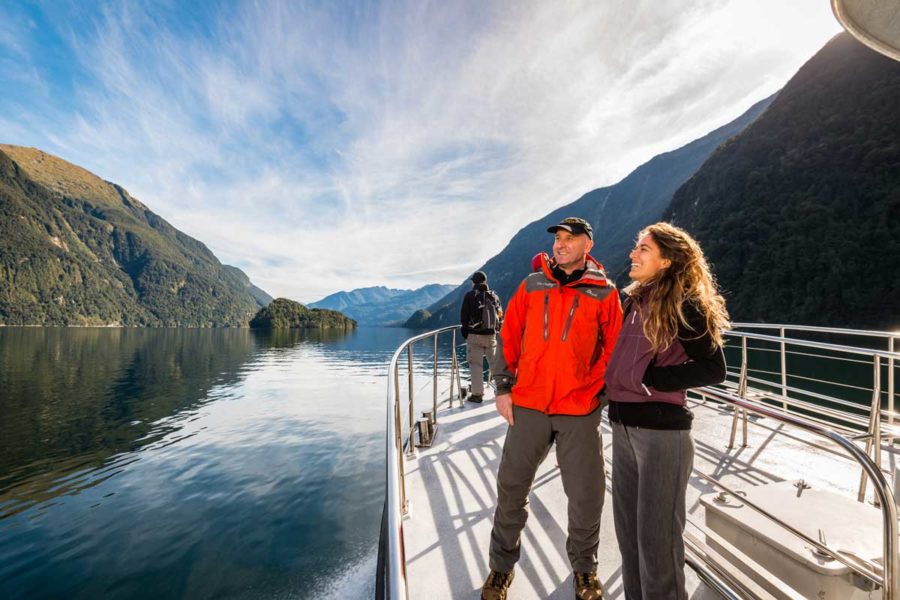
Here’s the thing: people plan rail trips like they plan city breaks, tight schedules, stacked attractions, constant motion. That’s backwards.
New Zealand’s best rail days breathe. They include intentional dead time: sitting with a coffee while farmland rolls by, stepping out at a small station just to stretch, letting a guide fill in the “why” behind what you’re seeing.
In my experience, the sweet spot for most travelers looks like this:
– One marquee rail leg per day
– A long lunch window or a slow afternoon stop
– Enough slack that a delayed departure doesn’t ruin the mood
When a gorge opens up outside the glass and the light turns cinematic, you don’t want to be checking your watch. You want to be quiet.
Summer routes worth your time (and which ones I’d skip)
Summer in NZ changes the color palette, more sparkle on the water, longer evenings, and that bright, clean clarity that makes even “ordinary” hills look composed.
The heavy hitters
TranzAlpine (South Island)
It’s the classic for a reason: you get real alpine drama, river valleys, and that sense of moving through changing ecosystems rather than just covering distance.
Coastal Pacific (Christchurch, Picton)
Coastline, cliff edges, and Kaikōura territory, when the sea is bright and the sky behaves, it’s almost unfair.
The “depends what you want” category
Some stretches are more about texture than spectacle, rural towns, pastureland, subtle coastline. That’s not a flaw. It’s just not fireworks every minute.
Look, if you want constant jaw-droppers, you may prefer fewer routes done slower rather than trying to stitch everything together like a checklist.
What “premium comfort” actually includes (not marketing fluff)
Premium on NZ rail tours should translate into practical, repeatable comfort. If it doesn’t, it’s just a nicer brochure.
Expect things like:
– Reclining, supportive seating with real legroom
– Consistent cabin temperature (no hot-cold swings that leave you cranky)
– Power outlets where you can actually reach them
– Lighting control that doesn’t nuke the view with reflections at dusk
– On-board food that’s regionally grounded, not just generic trays dressed up as “local”
On the best tours, dining isn’t a distraction; it’s timed to match the landscape. You’ll be eating when the views are calmer, not when you most want your camera out.
(And yes, blankets and quiet zones are underrated. People only realize that after hour three.)
Guides: the difference between “pretty” and “meaningful”
A view is a view. A story makes it stick.
Good guides don’t just recite trivia. They cue your attention: where to look, when the light hits a ridge, why a river braids the way it does, what that old station used to connect, which hill has an iwi history that doesn’t appear on the signboard.
I’ve seen a mediocre landscape become memorable purely because a guide gave it context. I’ve also seen a stunning valley feel weirdly empty when nobody explains it.
You want a guide who can do three things smoothly:
- Interpret geology and history without lecturing
- Manage timing so stops don’t feel rushed or pointless
- Read the group (some people want depth; some want space)
North Island → South Island: a sample flow that doesn’t feel frantic
Not a rigid itinerary, more a pattern that works.
North Island: highlights with variety
You’re mixing coastal edges, towns with real café culture, and volcanic or geothermal landscapes that change the mood fast. Stations tend to feel more “everyday functional,” which I like, less performance, more lived-in.
Add in:
– a heritage stop with restored rail architecture
– a market or waterfront meal timed after the day’s main rail leg
– one slower morning, because constant early starts get old quickly
South Island: the scale shift
The South Island doesn’t politely impress you. It goes big. Mountains arrive and stay. Rivers look engineered but aren’t. Weather changes its mind.
The ferry connection (if you do it) is its own transition beat. You can feel the tempo change.
Downtime is the secret ingredient (yes, really)
Tour brochures treat downtime like an empty space to fill. On rail journeys, downtime is the product.
A quiet carriage.
A long look out the window.
A tea break that coincides with the softest light of the day.
On longer legs, the best operators build in micro-breaks, short station stops, time to stand, reset, and come back to the seat ready to pay attention again. That’s not pampering. That’s fatigue management.
Logistics that actually matter (and the ones people obsess over for no reason)
The travel friction points are boring, but they decide whether your day feels smooth.
Focus on:
– Baggage handling rules (some tours handle it end-to-end, some don’t)
– Station transfers and how tight they are
– Seat selection (window preference isn’t trivial on scenic routes)
– Meal timing if you have dietary needs
And yes, a real data point: New Zealand’s tourism sector has rebounded strongly post-border reopening; international visitor arrivals have been climbing back toward pre-pandemic levels, affecting availability in peak seasons, especially on marquee routes. For trend context, see Stats NZ’s tourism and travel indicators (Stats NZ, International travel releases): https://www.stats.govt.nz/
That’s the practical takeaway: summer seats can disappear faster than people expect.
Family-friendly rail: more realistic than people assume
Rail can be shockingly good for families, mostly because it removes the worst parts of road trips: the constant stopping, the focus-drain of driving, the “are we there yet” spiral.
Spacious aisles help. Being able to stand up helps more. And when kids can watch the world change outside a giant window, time passes differently.
One caution (because it comes up): if your child needs constant stimulation, bring it. The scenery won’t always be dramatic every minute, and that’s fine.
Booking and comparing tours without getting fooled by shiny descriptions
When you compare guided rail tours, ignore the poetic copy for a second and ask blunt questions:
– How long are you actually on the train each day?
– How many real scenic stops happen, and how long do they last?
– Is food included, and is it decent or just “present”?
– What’s the guide-to-guest ratio?
– What happens when weather disrupts a photo stop?
A polished itinerary is nice. A resilient itinerary is better.
If you get those answers, the rest, fjords, volcanoes, coastlines, tends to take care of itself.